
Understand that Private Blog Networks represent one of the most controversial tactics in seo link building, and if you’ve been offered PBN services for your coffee blog, you need to know exactly what you’re getting into before making any decisions. A PBN is essentially a collection of websites created solely to manipulate search rankings by passing artificial authority to a target site through backlinks, operating in the shadows of Google’s guidelines rather than building genuine connections within the coffee community.
Recognize that PBNs fundamentally contradict the transparency and authenticity that define specialty coffee culture. While a legitimate coffee blog earns links through valuable content about origin stories, brewing techniques, or roaster profiles, PBN operators purchase expired domains, populate them with thin content, and create artificial link patterns that Google’s algorithms are increasingly sophisticated at detecting.
Consider the mechanics: PBN owners maintain dozens or hundreds of websites on different hosting providers and IP addresses, deliberately obscuring their interconnected nature. They’ll approach coffee bloggers promising quick ranking improvements, but these networks exist in isolation from real coffee conversations, lacking the engaged readership, social signals, and authentic editorial standards that characterize trustworthy specialty coffee publications.
Acknowledge that the coffee industry’s emphasis on traceability, direct relationships, and ethical practices extends naturally to digital marketing. Just as you wouldn’t claim coffee comes from a fictional farm, building your blog’s authority on fabricated website networks undermines the credibility you’ve worked to establish. The risks including manual penalties, algorithmic devaluation, and reputational damage far outweigh any temporary ranking gains, especially when authentic relationship-building and quality content creation offer sustainable alternatives aligned with your values.
What Exactly Is a Private Blog Network?

The Anatomy of a Typical PBN
Understanding how PBNs are constructed helps explain why they’re considered deceptive by search engines and the broader digital community. Think of a PBN as a theatrical set designed to create an illusion of legitimacy while hiding its true purpose.
The foundation of most PBNs begins with expired domains, websites that once had genuine audiences and earned authentic backlinks over time. PBN operators hunt for these domains after their original owners abandon them, specifically targeting those with established authority metrics and clean link profiles. It’s somewhat analogous to buying a coffee shop’s reputation without maintaining the quality that built it in the first place.
Once acquired, these domains get minimal makeover treatment. Operators typically install basic WordPress themes, populate them with thin or scraped content often unrelated to the domain’s original purpose, and create just enough pages to appear functional at first glance. For coffee-related PBNs, you might see generic articles about brewing methods or bean origins, frequently copied from legitimate sources or generated through automated tools with minimal human oversight.
Hosting arrangements are deliberately obscured to prevent search engines from detecting patterns. PBN managers spread their network across different hosting providers, use various IP address ranges, and employ different domain registrars. They’re essentially trying to make interconnected sites appear independent, like separate coffee roasters when they’re actually all owned by the same parent company hiding behind different storefronts.
The content strategy focuses on quantity over quality, with just enough posts to seem active. These sites then strategically link to the money sites, the actual businesses paying for this service. The entire structure exists solely to manipulate search rankings, prioritizing algorithmic gaming over genuine value creation for readers seeking trustworthy coffee information.
How PBNs Create Artificial Authority
PBNs operate on a deceptively simple premise: they create multiple websites, fill them with content, and strategically place links back to a target site—like your coffee blog—hoping to fool search engines into believing your site has earned legitimate endorsements. These networks exploit how search engines historically measured authority: through backlinks acting as digital votes of confidence.
Here’s the mechanics behind the manipulation. PBN operators often purchase expired domains that once belonged to legitimate businesses or publications, specifically choosing domains with existing backlink profiles. They then populate these zombie sites with generic content and insert links to client websites. The goal is to artificially transfer what’s called “link equity” or “domain authority”—essentially hijacking the trust these domains accumulated when they were genuine.
The fundamental problem? This approach completely inverts how real authority develops in any community, especially specialty coffee. Authentic authority in coffee blogging comes from demonstrable expertise—publishing detailed brewing guides based on experimentation, building relationships with roasters and farmers, earning mentions from respected publications, and receiving organic links from readers who genuinely value your insights.
Think about how you personally discover trusted coffee voices. You likely follow recommendations from baristas you respect, engage with bloggers who’ve helped you improve your technique, or trust publications with transparent sourcing practices. PBNs bypass this entire ecosystem of earned credibility, attempting to manufacture something that can only legitimately develop through consistent, valuable contribution to the coffee community.
Why Coffee Bloggers Are Targeted by PBN Sellers
The coffee blogging niche has become a prime hunting ground for PBN sellers, and understanding why reveals much about the intersection of commerce, content, and search visibility in specialty coffee. If you’ve received cold emails promising first-page rankings through “high-authority backlinks,” you’re not alone—coffee bloggers are increasingly targeted by these services.
The coffee niche presents what SEO practitioners call a “goldilocks scenario” for black-hat tactics: it’s lucrative enough to justify investment but not so saturated that manipulation becomes impossibly difficult. Keywords like best espresso machine or “specialty coffee subscription” carry significant commercial intent, meaning searchers are close to making purchasing decisions. These terms can generate substantial affiliate commissions or product sales, creating powerful financial incentives for bloggers to rank highly—and for PBN sellers to promise those rankings.
The competitive landscape intensifies this pressure. As specialty coffee culture has expanded, so has the number of bloggers, roasters, and equipment retailers vying for attention. Ranking organically for commercial coffee terms now requires substantial time, expertise, and content investment. PBN sellers exploit this reality by offering shortcuts that seem particularly appealing to newer bloggers facing established competitors with years of authority built up.
Additionally, the coffee community’s emphasis on authenticity creates an ironic vulnerability. Many coffee bloggers are passionate enthusiasts rather than SEO experts, making them less likely to recognize manipulative link-building tactics for what they are. When a seemingly legitimate service promises to help share your passion with more readers, the ethical implications might not be immediately apparent.
The craft coffee movement has always championed transparency in sourcing and production—values fundamentally incompatible with the deceptive nature of PBNs. Yet this same transparency makes coffee blogs attractive targets: genuine passion translates to engaged audiences, which translates to commercial value worth manipulating rankings to capture.

The Mechanics: How PBNs Actually Work in Practice
Domain Acquisition and Setup
The process of building a PBN begins with hunting for expired domains, and this is where things get particularly interesting for those of us in the specialty coffee world. PBN operators scour domain marketplaces and auction sites looking for websites that once had legitimate authority but whose owners let them lapse. Here’s the uncomfortable truth: that domain might have belonged to a dentist’s office in Ohio, a plumbing service in Seattle, or even a defunct tech startup. The previous content and industry? Completely irrelevant to the operator’s goals.
Once acquired, these domains undergo a transformation designed to mask their true purpose. Operators employ various footprint concealment techniques to make each site appear independent and legitimate to search engines. They’ll use different hosting providers, separate IP addresses, varied domain registrars, and diverse content management systems. The websites get populated with generic or scraped content, sometimes loosely related to their new linking purpose. In our coffee niche, you might see a former veterinary clinic’s domain suddenly hosting superficial articles about espresso machines alongside that hidden link to the money site.
The setup aims to eliminate patterns that Google’s algorithms might detect. Different website templates, varying publishing schedules, and unique WHOIS registration details all contribute to the illusion. Some operators even maintain basic functionality like contact forms or comment sections to appear genuine. However, no amount of technical concealment changes the fundamental deception: these sites exist solely to manipulate search rankings, not to serve readers seeking authentic coffee knowledge and ethical guidance.
Content Creation and Link Insertion
Here’s the uncomfortable truth about PBN content: it’s often remarkably poor quality, and that’s actually by design. The goal isn’t to inform or engage readers, but simply to exist as a vehicle for backlinks while fooling search engines into thinking these are legitimate sites.
Most PBN operators rely on one of three content creation methods. The first is article spinning, where existing content is run through software that swaps words with synonyms, creating barely readable text that technically passes plagiarism checks. Imagine reading about “bean juice beverage” instead of “coffee” and you’ll get the picture. The second method involves bulk AI-generated content, created through automated prompts that produce generic, surface-level articles devoid of genuine expertise or passion. The third, and perhaps most deceptive, is outright content scraping from legitimate sites, slightly modified to avoid detection.
When it comes to your coffee blog, these PBN sites might feature articles titled something like “Best Coffee Brewing Methods” or “Guide to Espresso Machines,” written with no real understanding of extraction science, terroir, or the craft that specialty coffee represents. Buried within this mediocre content, often two or three paragraphs in, you’ll find strategically placed links pointing to the target coffee blog.
These links typically use exact-match or partial-match anchor text. For instance, if someone wanted to boost rankings for “single-origin Ethiopian coffee,” the PBN article might contain a sentence like “For the best single-origin Ethiopian coffee, visit this expert guide,” with that phrase hyperlinked directly to the target blog.
The Real Risks for Coffee Content Creators
Google Penalties and Traffic Collapse
Google has become remarkably sophisticated at identifying PBN footprints, and the consequences of detection are severe. When Google discovers a private blog network, it typically responds in one of two ways: manual actions or algorithmic devaluations. Manual actions occur when a human reviewer at Google examines your site and identifies unnatural linking patterns, resulting in a notification through Google Search Console and an immediate ranking penalty. Algorithmic devaluations happen more quietly as Google’s machine learning systems discount the value of PBN links, causing your traffic to gradually decline without explicit notification.
What makes PBN penalties particularly devastating is the difficulty of recovery. Unlike other SEO mistakes that can be corrected relatively quickly, recovering from a PBN penalty requires disavowing potentially hundreds of links, waiting months for reconsideration, and rebuilding your reputation from scratch. For coffee bloggers who’ve invested years developing their voice and community, watching organic traffic collapse from thousands of monthly visitors to mere dozens is heartbreaking.
Google’s detection capabilities continue improving through pattern recognition that identifies hosting footprints, similar site structures, interlocking link patterns, and registration information commonalities. The search engine can also analyze content quality, identifying the thin, low-value content typical of PBN sites. For coffee blogs in particular, where authenticity and transparency form the foundation of reader trust, being associated with manipulative tactics can damage your reputation beyond what algorithms alone can measure. The question isn’t whether PBNs will be detected, but when.
Trust Erosion in a Transparency-Focused Industry
The specialty coffee world thrives on authenticity. We celebrate direct trade relationships, share origin stories, and champion roasters who can trace their beans back to specific farms and farmers. In this environment, using a PBN represents more than just an SEO violation—it’s a fundamental betrayal of the values our community holds dear.
When a coffee blog builds its reputation around ethical sourcing and transparency, readers expect that same integrity to extend to every aspect of the operation. Discovering that a trusted coffee resource has been artificially inflating its search rankings through manipulative link networks creates a profound disconnect. If they’re willing to deceive search engines, what else might they be misleading us about? Those glowing roaster reviews? The supposedly unbiased equipment recommendations? The entire foundation of trust crumbles.
The coffee community is surprisingly tight-knit and tech-savvy. Industry insiders, fellow bloggers, and engaged readers often possess enough digital literacy to spot suspicious backlink patterns. Tools like Ahrefs and Majestic are readily accessible, and dedicated readers have been known to investigate when something feels off about how a blog suddenly dominates search results.
When exposure happens—and it increasingly does—the fallout extends beyond Google penalties. Social media discussions in coffee forums and groups can permanently damage a blog’s reputation. Roasters and cafes may distance themselves from collaborations. Most critically, readers who once turned to you for guidance in navigating the complex world of specialty coffee will simply walk away, taking their trust to sources that demonstrate integrity both in their content and their practices. In an industry built on relationships and reputation, this cost far exceeds any temporary SEO gains.
How to Recognize PBN Pitches and Avoid Them
If you’re running a coffee blog, chances are you’ve received outreach emails promising quick SEO wins or offering guest post opportunities that seem almost too good to be true. Here’s the reality: many of these pitches come from PBN operators, and learning to spot them can save your site from serious consequences.
The most obvious red flag is pricing that defies logic. Legitimate guest posting on high-quality coffee sites typically requires excellent content and relationship-building. If someone offers you a link from multiple “high authority coffee blogs” for $50-150 per link, you’re almost certainly looking at a PBN pitch. Real editorial placements on established specialty coffee sites either happen organically or come at premium prices that reflect genuine value.
Watch for communication patterns that reveal the pitch’s true nature. PBN operators often send templated emails with generic compliments about your blog, followed immediately by their service offering. They rarely demonstrate actual knowledge of your content or the coffee industry. A genuine coffee blogger reaching out for collaboration will reference specific articles you’ve written, engage with your perspective on single-origin processing methods, or mention your stance on direct trade relationships.
Another telltale sign is the promise of guaranteed rankings or specific traffic increases. Search engines are complex systems, and ethical SEO professionals never guarantee specific outcomes. If someone promises “first page rankings in 30 days” through their “network of coffee sites,” they’re selling PBN links.
Examine the examples they provide carefully. Request to see the actual sites where your link would appear. If they refuse or provide vague answers, walk away. Check whether these sites have natural link profiles, regular publishing schedules, diverse authors, and genuine engagement from readers. PBN sites typically lack comments, social sharing, and the passionate community discussions that characterize real specialty coffee blogs.
The language of the pitch matters too. Phrases like “private network,” “link placement service,” or “guaranteed link insertion” are industry euphemisms for PBN operations. Legitimate opportunities use terms like “editorial contribution,” “guest authorship,” or “collaborative content.”
Remember that in specialty coffee culture, transparency and authenticity aren’t just buzzwords—they’re foundational values. The same ethical framework that leads us to question coffee sourcing should guide our approach to building online presence.
Building Authority the Right Way: Ethical Alternatives for Coffee Bloggers
Relationship-Based Link Building in the Coffee Industry
Instead of building artificial networks, successful coffee bloggers cultivate authentic relationships within the specialty coffee community. This approach not only generates high-quality backlinks but also strengthens your credibility and deepens your understanding of the craft.
Start by engaging genuinely with local roasters and cafes. Visit their establishments, document your experiences thoughtfully, and share insights that celebrate their craftsmanship. When you write about a roaster’s unique approach to sourcing Ethiopian Yirgacheffe or their innovative fermentation techniques, reach out to share your article. Many roasters appreciate well-researched coverage and will naturally link to or share your content with their audiences.
The coffee equipment manufacturing community offers another avenue for relationship building. Companies that produce grinders, espresso machines, and brewing devices often seek knowledgeable reviewers. By providing honest, detailed evaluations that educate readers about the science behind extraction and temperature stability, you become a valuable resource worth linking to.
Barista communities, both online forums and competition circuits, thrive on shared knowledge. Contribute meaningfully to discussions about technique refinement, recipe development, or sensory analysis. Write comprehensive guides that address common challenges, from dialing in grind size to understanding water chemistry’s impact on flavor.
Collaborate with fellow coffee writers on roundup posts, participate in coffee blog carnivals, or co-create educational content about sustainable farming practices. These partnerships often result in natural link exchanges that benefit all parties while serving readers with diverse perspectives.
Remember, relationship-based link building requires time and genuine interest in the community, but the connections you forge will prove far more valuable than any artificial network.
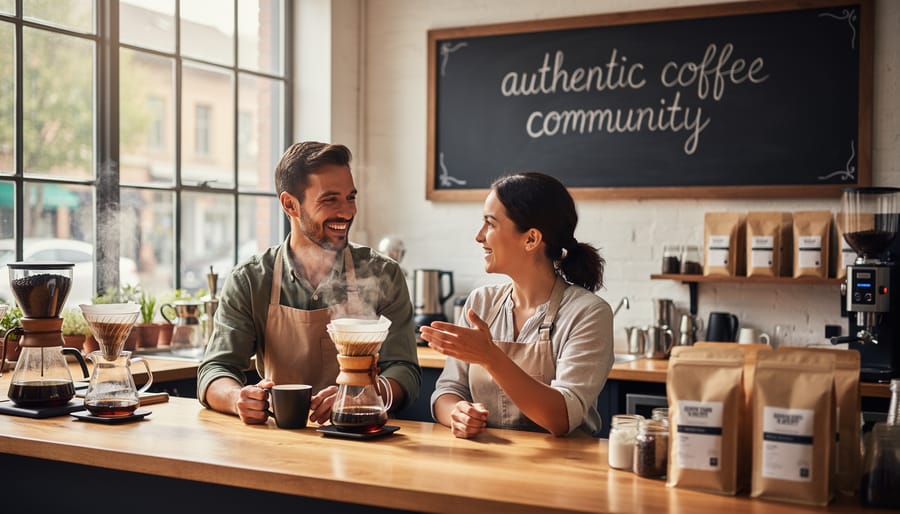
Content Excellence and Natural Link Attraction
The most powerful alternative to PBNs lies in creating content so valuable that others naturally want to reference it. When you publish comprehensive guides that genuinely help coffee enthusiasts master their craft, you build something far more sustainable than any manipulative link scheme.
Original research resonates deeply within the coffee community. Consider conducting blind taste tests comparing different brewing methods, documenting water chemistry experiments, or tracking flavor development across roast profiles. When you share transparent methodology and honest results, specialty coffee forums, Reddit communities, and industry publications naturally cite your work. This approach aligns perfectly with specialty coffee’s emphasis on transparency and scientific exploration.
Storytelling creates equally powerful link magnets. Document your journey visiting origin farms, interview roasters about their craft, or explore the cultural significance of coffee rituals across different regions. These narratives connect emotionally with readers while providing quotable insights that other coffee writers reference organically.
The beauty of this approach is its alignment with coffee culture itself. Just as specialty coffee emphasizes ethical sourcing and craft over shortcuts, content excellence prioritizes genuine value over manipulation. Your backlinks become endorsements from real enthusiasts who trust your expertise, not algorithmic artifacts from ghost websites.
This strategy requires patience and consistent quality, much like developing the perfect espresso recipe. But the results compound over time, building authority that search engines reward and readers respect, without the constant anxiety of potential penalties.
Community Engagement and Collaborative Content
Instead of relying on manipulative networks, coffee bloggers can build genuine authority through active community participation. Engage authentically in specialty coffee forums like Home-Barista or the Coffee subreddit, where thoughtful contributions about roasting techniques, brewing science, or origin stories naturally establish your expertise. These conversations often lead to organic backlinks when community members reference your insights or blog posts.
Social platforms offer tremendous opportunities for collaboration. Partner with roasters, baristas, or other coffee writers on Instagram takeovers, YouTube brew-alongs, or podcast interviews. These partnerships create legitimate cross-promotional opportunities that Google rewards because they represent real relationships and shared audiences. Consider joining coffee blogging collectives or contributing guest posts to established publications in the specialty coffee space, where editorial standards ensure quality associations.
Collaborative projects like cupping events, origin trip documentation, or crowdsourced coffee maps generate natural link-building opportunities while advancing coffee education. When your content genuinely serves the community, addressing questions about ethical sourcing or demystifying espresso extraction, readers share it because it provides value, not because you’ve engineered a network of ghost sites. This approach aligns perfectly with specialty coffee’s emphasis on transparency and craft, building sustainable visibility that withstands algorithm changes and strengthens your reputation within the community you serve.
The specialty coffee world thrives on transparency. We celebrate the stories behind each origin, the dedication of farmers whose names we know, and the craft of roasters who share their processes openly. This culture of authenticity isn’t just marketing—it’s the foundation of trust that connects everyone from producer to consumer. Private Blog Networks fundamentally contradict these values.
When you build your coffee blog’s authority through PBNs, you’re choosing deception over the genuine connections that make our community meaningful. You’re prioritizing algorithmic manipulation over the patient work of creating valuable content that educates readers about extraction techniques, helps them understand flavor profiles, or connects them with ethical sourcing practices. The irony is stark: in an industry where we demand complete transparency about supply chains and processing methods, using hidden link networks to boost search rankings reveals a troubling double standard.
The path to sustainable growth in coffee blogging isn’t mysterious or complicated. It requires sharing genuine expertise, engaging authentically with your community, and building relationships based on mutual respect rather than manufactured metrics. Yes, this approach takes longer. It demands consistent effort without guaranteed shortcuts. But it creates something far more valuable than temporary search rankings—it establishes you as a trusted voice within a community that values integrity above all else.
Your audience can taste the difference between commodity-grade content and specialty-level expertise. They’ll always choose authenticity over artificial enhancement. The question isn’t whether PBNs work technically, but whether they align with who you want to be as a coffee content creator. Choose the long pour-over method, not instant coffee shortcuts.