Yes, you can heat up cold brew, and it won’t ruin the drink. Cold brew is coffee steeped in cool or room-temperature water for hours, which pulls out sweetness and body while leaving many of the sharper acids behind in the grounds. That’s why warming it doesn’t create bitterness: those acids were never in the cup to begin with. The smooth, low-acid character stays intact as long as you keep it below a boil.
Caffeine isn’t a concern either. It’s heat-stable, so a warm mug delivers the same lift as a cold glass.
The practical target is 150°F, the sweet spot where cold brew turns cozy without losing its rounded flavor. You can get there a few ways: stirring freshly boiled water into a cold brew concentrate, warming it gently on the stovetop over low heat, or using the microwave in short bursts. Each method has its own logic, and the details matter.
If you’ve spent time and good beans, ideally ethically sourced ones, on a batch of cold brew, you deserve to know how to enjoy it hot without wasting the craft behind it. Here’s what heating actually changes, and how to do it right.
What Hot Cold Brew Actually Means
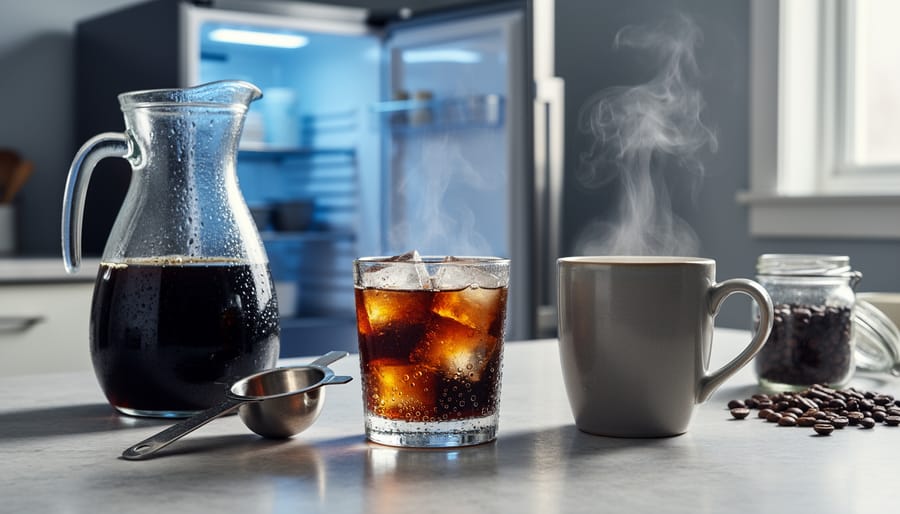
Picture a Sunday morning: the fridge is stocked with cold brew, but the air outside is crisp and you want something steaming in your hands. Is that a betrayal of the drink? Not at all. Heating cold brew simply means gently warming a finished, cold-steeped coffee for serving. It isn’t brewing hot coffee, and it isn’t reviving a stale cup of drip that has sat on the counter all morning.
The difference starts at the beginning. Cold brew is made by steeping grounds in cool or room-temperature water for an extended time, so time does the work that heat does in a pour-over or drip machine. Research on Cold vs hot compound extraction shows the two methods pull different mixes of compounds from the same beans. Cold brew starts life as a different chemical conversation, which is why warming it later feels so different from reheating hot-brewed coffee.
You’ll usually begin from one of two places: ready-to-drink cold brew, poured straight from the bottle, or cold brew concentrate, a stronger base you dilute to taste. Here’s a quick glossary:
- Cold brew
- Coffee steeped in cool or room-temperature water for a long time, then strained.
- Cold brew concentrate
- A strong cold-steeped base meant to be diluted with water, milk, or ice before drinking.
- Cold extraction
- Pulling flavor from grounds with time instead of heat, which leaves some bitter compounds behind in the grounds.
- Acidity
- In coffee talk, the perceived brightness on your tongue, which is a different thing from the pH number a lab would measure.
- Reheating vs. warming
- Reheating revives coffee that was already brewed hot, while warming gently brings finished cold brew up to a comfortable drinking temperature.
Think of it as craft shaped by patience: the heavy lifting happened overnight in a jar, and a little warmth afterward is just the finishing touch.
How Warming Cold Brew Works: Flavor, Acidity and Caffeine
Flavor: What Changes and What Stays
Warm a glass of cold brew and you’ll notice the aroma first. Heat carries scent to your nose, so the cup smells fuller before you’ve taken a sip, and that extra aromatic lift can make it taste a touch sweeter. That’s a perception effect, not a measured change in sugars, but it’s real enough that plenty of people find the warm version cozier than the iced one.
What stays put is the rounded, low-acid character that made you reach for cold brew in the first place. You can warm it up without ruining that smooth profile. Because cold extraction left the sharper acids behind in the grounds, heating the finished liquid doesn’t conjure bitterness out of nowhere.
Be honest with yourself about one thing: this won’t taste like a freshly brewed hot pour-over, and it isn’t meant to. Hot brewing pulls different compounds from the grounds, which gives you the brighter, more layered cup many of us love. Warmed cold brew is its own drink, mellow and chocolatey in a way that’s hard to pin down but easy to enjoy. Neither is a downgrade, just a different expression of the same bean.
The water matters more than people expect, too. If you’re diluting a concentrate, the quality of your water for coffee shapes how clean and sweet the warm cup finally tastes.
Acidity: Why Heat Doesn’t Turn It Bitter
Here’s the thing about the bitterness worry: it assumes heat is what creates the harsh stuff. With cold brew, that’s backwards. Cold extraction left the compounds behind in the grounds, the same ones responsible for sharp, bitter acidity in a hot-brewed cup. When you pour that finished liquid into a mug and warm it, there’s very little of that harshness left to release. You’re not extracting anything new, just changing the temperature of what’s already in the glass.
That’s why warming cold brew doesn’t turn it sour or bitter. The low-acid profile holds, provided you keep the heat gentle and stay away from boiling. Think of the target as comfortably hot, not scalding. Pushing it toward a boil is where you start to lose the rounded character that made you reach for cold brew in the first place.
It helps to separate two ideas here: what you taste and what a lab measures. Smoothness is a perception, how the drink feels and reads on your tongue. Acidity as a measurement is a separate matter. I won’t hand you made-up numbers for either, because the practical takeaway doesn’t need them. If it tasted smooth cold, it will taste smooth warm. The research on Temperature slows profile changes in cold brew also fits the craft-and-science view: extraction is chemistry you control with time and temperature, and gentle warming keeps you on the right side of it.
Caffeine: Your Buzz Survives the Warm-Up
Here’s the part that tends to worry people most: will heating cold brew take the kick out of it? It won’t. Caffeine is heat-stable, so warming your cold brew doesn’t zap your buzz. Hot-brewed coffee is made with water near boiling, and the caffeine comes through that just fine. A gentle warm-up of a finished cup is far milder than that.
That’s the nice thing about cold brew’s long, slow steep. The caffeine gets pulled into the liquid during those hours in cool water, and once it’s there, it stays put. Pouring that cold brew into a mug and warming it on the stove, or stirring in freshly boiled water, simply changes the temperature of what’s already in the glass. The chemistry of the caffeine stays untouched.
So if you reach for cold brew because it’s your reliable morning pick-me-up, you can keep doing exactly that on a cold day, hot mug in hand. What shifts is the drinking experience: warmth, aroma, a different kind of comfort. The energy you were counting on comes along for the ride.
Think of it as changing the serving temperature, not the drink itself. You get the same cold brew, now with steam rising off the top.
Three Ways to Heat Cold Brew (and When to Use Each)
Hitting the 150°F Sweet Spot
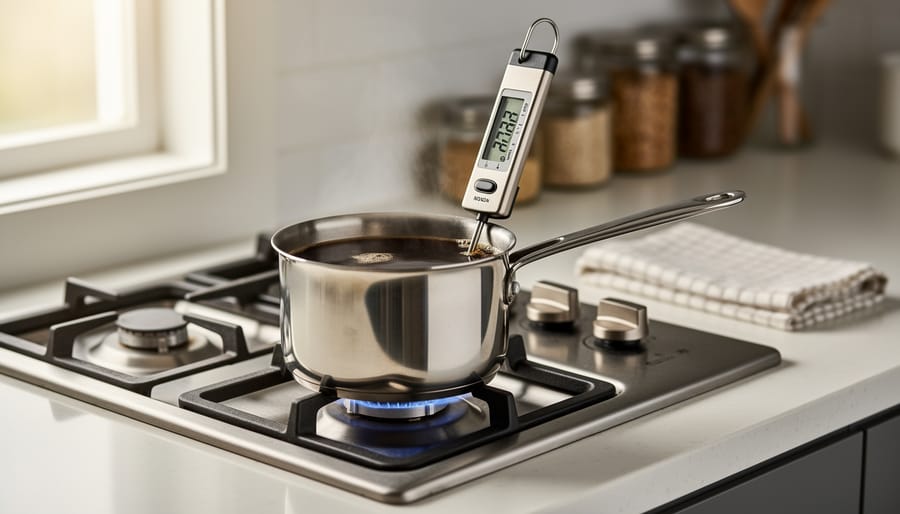
Aim for 150°F when you warm cold brew. That’s hot enough to feel like a proper mug of coffee, yet it stays well below boiling, which is where the smooth, low-acid character starts to suffer. Cold extraction left the harsh acids behind in the grounds, so gentle warmth keeps the drink mellow. Pushing it toward a boil is the one move that can undo what made cold brew appealing in the first place.
If you like precision, a simple, inexpensive thermometer takes the guesswork out. It’s one of the most useful coffee brewing tools you can add to a home setup, and any basic kitchen model will do.
Here’s a quick reference for each method:
- Freshly boiled water plus concentrate: the safest route, since the water does the warming.
- Low-heat stovetop: best for ready-to-drink cold brew when you can be patient.
- Microwave in 30-second bursts, stirring each time: the fastest option when you’re short on time.
Whichever you choose, check the temperature before the first sip.
Hot Cold Brew: Common Questions
Can you heat cold brew coffee?
Yes. You can warm cold brew without ruining its smooth, low-acid profile, and the sweet spot is around 150°F.
Does heating cold brew ruin the flavor?
No. Cold extraction left the bitter acids behind in the grounds, so warming doesn’t create them, and the low-acid character holds as long as you stay below boiling.
Can you reheat coffee in general?
Generally, yes. Caffeine is heat-stable, so reheating won’t zap your buzz, though the taste of other coffee depends on how it was brewed and how long it sat.
What’s the best method to heat cold brew?
The stovetop on low heat is the best method, while freshly boiled water added to concentrate is the safest. If you use a microwave, go in 30-second increments and stir each time.
Notice how the same logic runs through every answer: gentle warmth keeps what makes cold brew special. If you’re curious how your daily cup fits into the bigger picture, our reading on coffee and health is a good next stop. For now, pick a method, aim for that 150°F mark, and enjoy the mug.
So, can you heat up cold brew? Absolutely. The smoothness you love stays put, the caffeine comes along for the ride, and gentle heat around 150°F is the whole secret. Keep it below boiling and you’ll keep that low-acid character intact.
From here, the fun is yours. Play with your concentrate ratios, try the stovetop one week and boiled water the next, and notice how each small choice shapes the cup. That curiosity is the heart of home brewing. And if you’re ever going to store coffee beans or stock up on cold brew, look for sources that pay farmers fairly. Better coffee starts there.