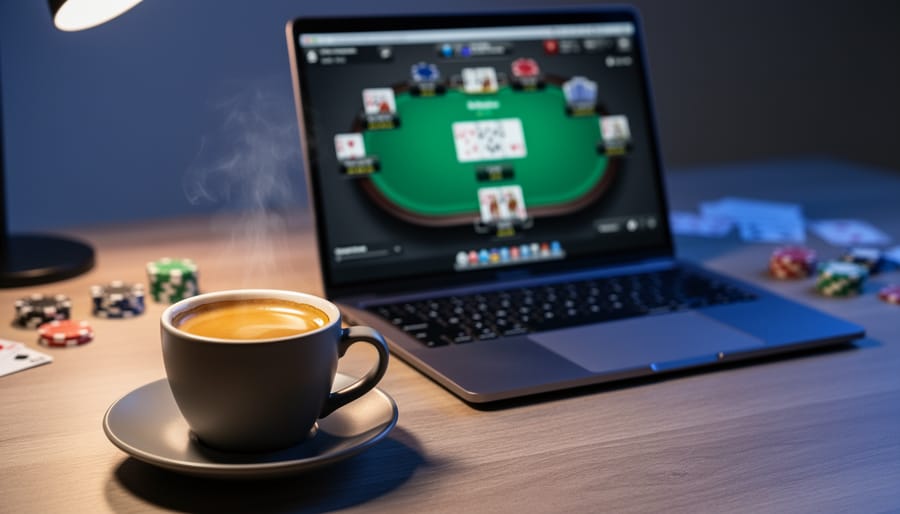
Choose a medium roast with balanced acidity and sweetness—around 100-150mg of caffeine per cup—to enhance decision-making without triggering jitters during your sessions. When you play at Moonbet or any online poker platform, timing your coffee intake 30-45 minutes before play maximizes alertness as the caffeine peaks exactly when you need sharp focus for reading opponents and calculating pot odds.
The relationship between coffee and poker performance isn’t just folk wisdom passed around casino floors—it’s grounded in neuroscience. Caffeine blocks adenosine receptors in your brain, the compound responsible for drowsiness, while simultaneously increasing dopamine production. This neurochemical combination sharpens pattern recognition and speeds information processing, two critical skills when you’re three hours into a tournament and facing complex betting situations.
But here’s where most poker players get it wrong: they treat coffee as an endless fuel source, pouring cup after cup throughout marathon sessions. This approach backfires spectacularly. Excessive caffeine consumption leads to anxiety, impaired judgment, and the dreaded “tilt”—that emotional state where rational decision-making evaporates. The key lies in strategic consumption: one well-timed cup of ethically sourced, properly brewed coffee delivers cognitive enhancement, while respecting both the craft behind your beverage and the discipline required at the tables.
Understanding how to harness coffee’s benefits without falling into its pitfalls can transform your game, turning a simple ritual into a competitive advantage rooted in science and mindful consumption.
The Mental Marathon of Online Poker
Why Focus Matters More Online Than at the Table
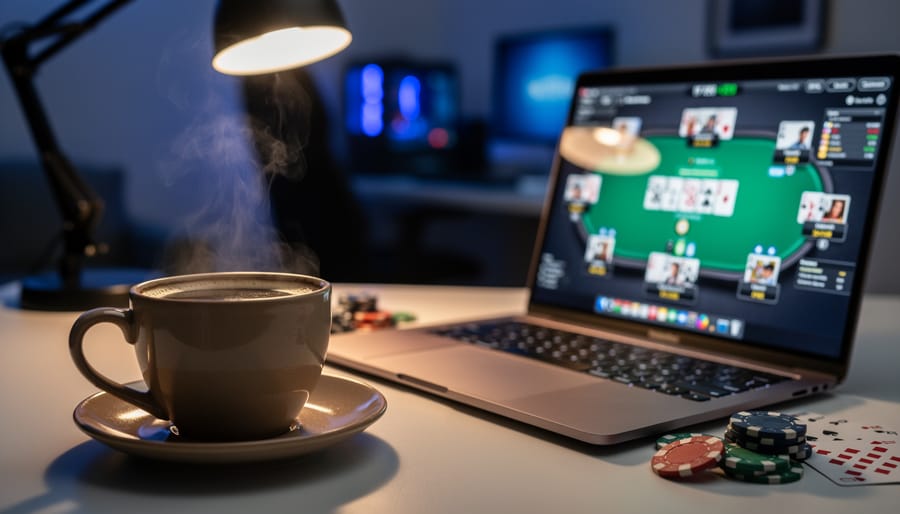
The digital poker table presents a fundamentally different cognitive challenge than its felt-covered counterpart. When you’re seated at a casino, the social dynamics keep you naturally engaged. There’s the dealer’s rhythm, the weight of chips in your hands, the subtle shifts in your opponent’s posture. Your brain stays stimulated through multiple sensory channels.
Online poker strips away these natural engagement tools. You’re facing a screen that displays hands in rapid succession, often managing three, four, or even six tables simultaneously. Each decision window might last mere seconds, demanding sustained attention without the physical anchors that ground you in live play. The screen becomes a portal where concentration either crystallizes or fractures.
Consider the unique fatigue factors at play. Blue light exposure affects your circadian rhythm differently than casino lighting. Your eyes track cards and bet sizes across multiple windows while your peripheral vision catches notifications from messaging apps, email alerts, or streaming content on adjacent screens. The barrier to distraction is paper-thin: a single click transports you from analyzing pot odds to scrolling social media.
The absence of physical tells shifts your focus entirely to betting patterns, timing tells, and statistical data displayed through tracking software. This analytical load is considerable, requiring your brain to process numerical information continuously while maintaining emotional equilibrium through inevitable variance swings. Without the right cognitive fuel and strategic approach to maintaining alertness, even experienced players find their edge deteriorating as sessions extend beyond their optimal focus window.
How Coffee Actually Affects Your Brain During Play
The Sweet Spot: Optimal Caffeine Doses for Cognitive Performance
Finding your ideal caffeine dose is like dialing in the perfect espresso extraction—it requires attention to detail and understanding that everyone’s threshold differs. Research suggests the cognitive sweet spot typically falls between 40-300mg of caffeine, but treating this as a rigid prescription misses the artisanal nuance that coffee lovers appreciate.
For context, a standard 8-ounce cup of drip coffee contains roughly 95mg of caffeine, though this varies dramatically based on bean origin, roast level, and brewing method. A double shot of espresso delivers about 120-150mg, while lighter roasts generally pack more caffeine than their darker counterparts—a common misconception worth noting.
Studies indicate that moderate doses around 75-150mg enhance attention, reaction time, and working memory without triggering the jitters that undermine focus during critical poker decisions. If you’re settling in for a lengthy online tournament, consider this your baseline rather than your ceiling. The key lies in understanding your personal metabolism and tolerance, which can vary based on genetics, body weight, and regular consumption patterns.
Timing matters tremendously. Caffeine peaks in your bloodstream 30-60 minutes after consumption, so strategic sipping before your session begins optimizes its cognitive benefits. For marathon sessions lasting several hours, smaller doses spaced 3-4 hours apart maintain steady focus better than front-loading with a massive morning mug. This approach respects caffeine’s half-life of roughly 5-6 hours while preventing the anxiety and decision fatigue that accompany overconsumption.
Remember, quality matters as much as quantity. Ethically-sourced, freshly-roasted beans prepared with care deliver not just caffeine but complex compounds that support sustained alertness. Your poker game deserves the same thoughtful preparation as your coffee ritual.
When Coffee Becomes Your Worst Enemy at the Tables
Here’s the uncomfortable truth that every poker player needs to hear: the same coffee that sharpens your focus during the first hour can become your biggest liability by hour three. It’s a pattern I’ve witnessed countless times, and the science behind it reveals why that perfectly crafted espresso can sometimes work against you.
The problem begins with caffeine’s impact on your nervous system. While moderate amounts enhance alertness, excessive consumption triggers physiological responses that are particularly problematic for poker players. Your hands develop a subtle tremor, your heart rate elevates, and most critically, your anxiety levels spike. This heightened state doesn’t translate to better decision-making. Instead, it distorts your risk assessment capabilities, making marginal hands seem more promising than they are or causing you to fold strong positions out of unwarranted fear.
Consider what happens during a typical four-hour session. You start with a carefully prepared cup, feeling sharp and focused. Two hours in, sensing a dip, you brew another. The cumulative effect isn’t simply additive; it compounds. Research indicates that caffeine’s half-life means your second cup stacks onto the remaining caffeine from your first, pushing you past the cognitive sweet spot into overstimulation territory.
The crash presents an even more insidious challenge. Caffeine blocks adenosine receptors, temporarily preventing the fatigue signal from reaching your brain. But adenosine keeps accumulating, waiting. When caffeine’s effects wane, often during crucial late-game decisions, that backlog hits suddenly. Your concentration collapses precisely when you need it most.
Then there’s tolerance, the silent enemy of habitual coffee drinkers. That same dosage that once provided clarity gradually loses effectiveness, tempting you to increase consumption and accelerate the cycle of diminishing returns. Your body adapts, requiring more caffeine to achieve baseline alertness, let alone peak performance. This isn’t coffee’s fault; it’s simply biochemistry. Understanding this relationship allows you to use coffee strategically rather than letting it use you.
The Ritual Factor: Separating Placebo from Performance
Here’s something fascinating that might resonate with your pre-game ritual: that sense of focus you feel after brewing your morning cup might be as much about the ceremony as the caffeine itself. When it comes to online poker and coffee, we’re dealing with a powerful psychological cocktail that goes beyond simple biochemistry.
Research in sports psychology has long recognized that pre-performance rituals serve genuine functions beyond superstition. The act of grinding beans, measuring water temperature, and timing your extraction creates what psychologists call an “anchor” – a consistent environmental cue that signals to your brain it’s time to shift into performance mode. For poker players, this transition from everyday consciousness to strategic thinking is particularly valuable.
But here’s where it gets interesting: placebo effects aren’t fake effects. When you believe your carefully crafted pour-over will sharpen your focus, your brain actually responds by releasing dopamine and activating attention networks. Studies on ritual behavior show that the predictability and control inherent in coffee preparation can reduce anxiety and enhance confidence – both crucial for maintaining composure during challenging hands.
The challenge lies in distinguishing between genuine caffeine benefits and ritual-based performance enhancement. A well-designed personal experiment can help: alternate between caffeinated and decaf sessions while maintaining your exact preparation ritual. Track your session outcomes, decision quality, and emotional regulation across both conditions. This approach respects both the craft of coffee preparation and the science of performance optimization.
What matters most isn’t whether your focus comes from adenosine receptor blocking or psychological priming – it’s that you’ve created a sustainable, enjoyable practice that supports your play. The ethically sourced, carefully prepared coffee you’re drinking serves multiple functions: delivering genuine cognitive benefits while anchoring a mindful transition into competitive focus. That’s not placebo – that’s intelligent preparation that honors both the science of performance and the craft of exceptional coffee.
Choosing Your Poker Session Coffee Wisely
Single-Origin vs. Blends: What Works Best for Sustained Sessions
When you’re settling in for a marathon poker session, your coffee choice matters more than you might think. Single-origin coffees and blends each bring distinct advantages to the table, literally and figuratively.
Single-origin coffees typically offer more nuanced, complex flavor profiles that keep your palate engaged without overwhelming it. A bright Ethiopian Yirgacheffe or balanced Colombian coffee provides consistent caffeine content—usually between 100-140mg per 8oz cup—with flavor notes that won’t tire your taste buds over multiple hours. These coffee varieties shine when you’re looking for sustained, steady alertness without dramatic spikes.
Blends, however, were historically created for consistency and often balance different caffeine levels from various origins. A well-crafted blend combining higher-caffeine Robusta with smoother Arabica can deliver both sustained energy and pleasant drinking experience. The predictability matters when you need reliable focus across multiple sessions.
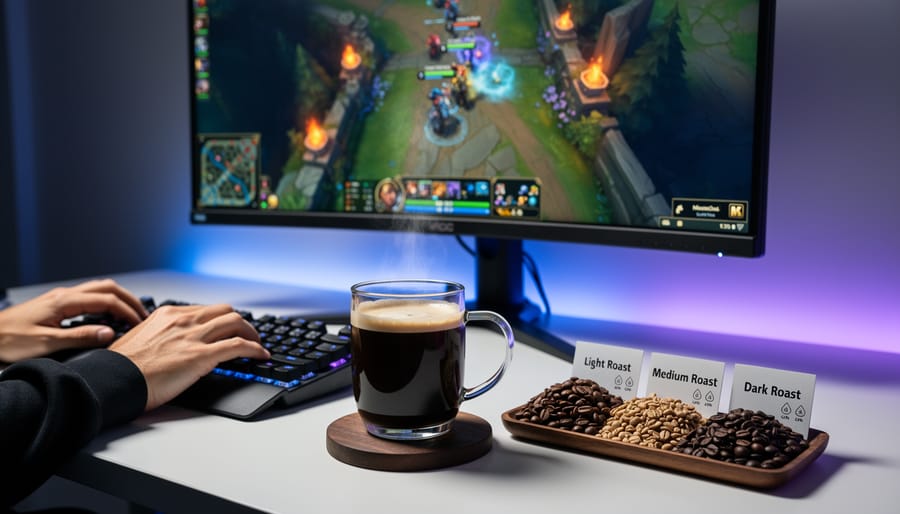
For extended poker play, consider medium roasts from either category. They preserve more caffeine than darker roasts while offering flavor complexity that doesn’t become monotonous. Central American origins like Guatemala or Costa Rica provide sweet, chocolaty notes that pair well with sustained sipping, while African coffees offer brighter, fruit-forward profiles for variety.
The key is freshness and proper preparation. Whether you choose single-origin or blends, storing your coffee beans correctly ensures consistent caffeine content and flavor throughout your sessions. Experiment with both approaches to discover what keeps you alert and engaged without causing palate fatigue or jitters.
Brewing Methods That Match Your Play Style
Just as poker players adapt their strategies to different game formats, your coffee brewing method should align with your session requirements and play style. Understanding how different extraction techniques affect caffeine delivery can help you maintain optimal focus throughout your games.
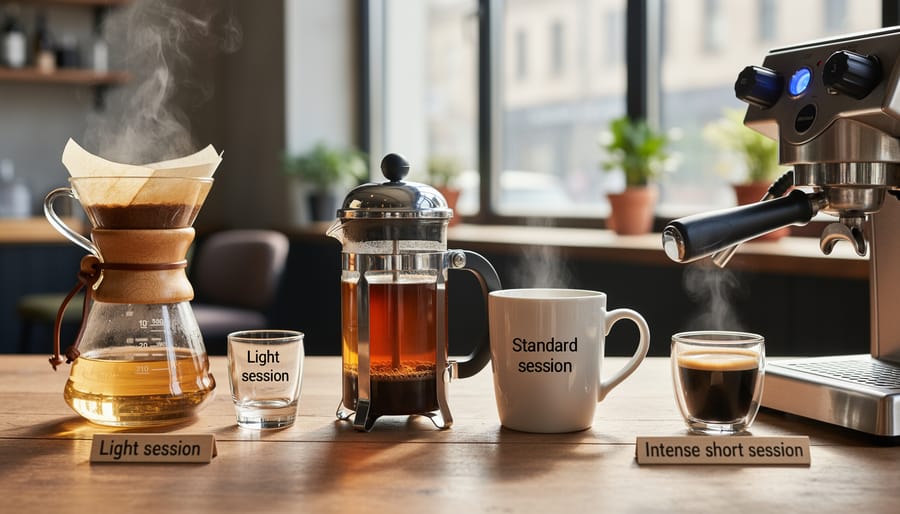
For rapid-fire tournament players facing quick decisions and escalating blinds, espresso becomes your strategic ally. The concentrated extraction delivers approximately 63mg of caffeine per shot within minutes, providing an immediate cognitive boost when you need sharp focus during crucial tournament stages. Quality espresso preparation ensures consistent results between rounds, allowing you to time your intake precisely with tournament breaks.
Cash game grinders settling in for extended sessions benefit from the ritual and sustained release of pour-over methods. The slower extraction process, taking 3-4 minutes, creates a moment of mindfulness between hands while delivering roughly 95mg of caffeine per cup. This brewing style encourages measured consumption, preventing the jittery overcaffeination that can derail decision-making during marathon sessions. The transparency of pour-over also connects you to the coffee’s origin story, a reminder of the craft and intention behind both your beverage and your gameplay.
Planning an all-night session? Cold brew offers sustained energy without the acid spike that can upset your stomach during long grinds. With caffeine levels reaching 200mg per serving due to extended steeping times, cold brew provides steady stimulation over hours. However, its smooth taste can make overconsumption dangerously easy, so measure your portions deliberately.
Your choice of brewing equipment should match both your poker schedule and your commitment to quality, treating each cup as intentionally as you’d approach a significant betting decision.
The Responsible Gambler’s Coffee Strategy
Here’s the uncomfortable truth every poker player needs to hear: that third cup of coffee keeping you at the table might not be sharpening your edge—it might be masking the exhaustion that’s costing you money.
The relationship between caffeine and responsible gambling deserves honest conversation. While coffee genuinely enhances cognitive function during your first few hours at the tables, it can become problematic when it transitions from performance tool to fatigue suppressor. Your body’s tiredness isn’t a problem to be solved with more espresso; it’s essential feedback signaling that your decision-making capacity has diminished.
Research on decision fatigue reveals that mental exhaustion degrades our judgment long before we consciously recognize we’re impaired. When you reach for another cup to “stay sharp” after several hours of play, you’re likely already past your optimal performance window. The caffeine might keep your eyes open, but it cannot restore the nuanced analytical thinking that separates winning sessions from costly mistakes.
This becomes particularly dangerous during losing streaks. The temptation to use caffeine as fuel for extended sessions—hoping to recover losses—combines two risky behaviors: chasing losses and ignoring physiological limits. It’s a pattern that transforms coffee from a thoughtful performance enhancer into an enabler of poor gambling decisions.
Establishing boundaries requires self-awareness. Set predetermined session lengths that account for caffeine’s four-to-six-hour effective window, typically limiting serious play to three-hour blocks. If you’re considering another cup to continue playing, treat that impulse as an automatic stop signal instead. The combination of financial stress and stimulant consumption can override your natural quit signals, making pre-committed limits essential.
Consider your caffeine consumption as part of your overall poker bankroll management strategy. Just as you wouldn’t risk money you can’t afford to lose, don’t consume stimulants to extend sessions beyond your mental endurance. Respect both your craft and your limits—the tables will still be there tomorrow, and you’ll play better rested than you ever could caffeinated and exhausted.
Beyond Coffee: What the Science Says About Alternatives
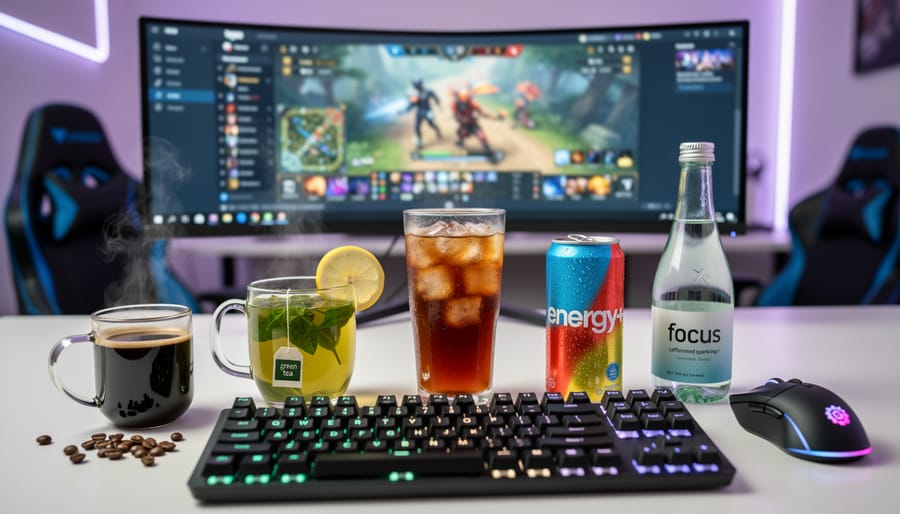
While coffee remains the gold standard for poker players seeking sustained focus, the beverage landscape offers intriguing alternatives worth considering, each backed by its own science.
Green tea has earned particular attention in gaming circles, and for good reason. The unique combination of caffeine and L-theanine creates what researchers call a synergistic effect. L-theanine, an amino acid found almost exclusively in tea plants, promotes alpha brain wave activity associated with relaxed alertness. When paired with caffeine’s stimulating properties, this combination delivers focus without the jitters that sometimes accompany coffee. A typical cup of green tea contains 25-50mg of caffeine alongside 8-30mg of L-theanine, creating a gentler cognitive enhancement that some players prefer for maintaining calm decision-making during tense hands.
Yerba mate, the South American traditional beverage, has also found its way into poker rooms worldwide. With caffeine levels comparable to coffee (85mg per cup) plus additional compounds like theobromine and theophylline, mate provides a different stimulant profile. Many players report experiencing smoother, longer-lasting energy compared to coffee, though scientific research on these subjective experiences remains limited.
For late-night sessions where sleep still matters, decaf coffee presents an interesting option. While it contains only 2-5mg of caffeine per cup, the ritual itself can provide psychological benefits. Some players find that maintaining their coffee routine, minus the stimulant, helps signal focus time without compromising their ability to wind down afterward.
The craft of preparation matters regardless of your choice. Just as properly sourced, freshly ground coffee beans matter to flavor and effect, quality tea leaves and ethically harvested yerba mate deserve equal consideration. Understanding your beverage’s origin story enhances both the experience and its impact on your game.
The relationship between coffee and poker performance isn’t about finding a magic elixir that transforms casual players into champions. Instead, think of coffee as one element in a comprehensive approach to optimal play, similar to how a skilled barista considers water temperature, grind size, and extraction time when crafting the perfect cup.
The evidence is clear: strategically consumed coffee can genuinely enhance the cognitive functions that matter most at the poker table—sustained attention, pattern recognition, and decision-making speed. But this enhancement operates within realistic boundaries. A well-timed espresso might help you maintain focus during hour three of a session, but it won’t compensate for poor bankroll management, inadequate game knowledge, or the foggy thinking that comes from chronic sleep deprivation.
The key lies in mindful consumption. Understand your personal caffeine threshold, respect your body’s signals, and recognize when you’re using coffee to genuinely enhance performance versus masking fatigue that demands rest. This isn’t just about winning more hands; it’s about sustainable play that doesn’t compromise your health or relationship with gambling.
Ultimately, coffee deserves the same thoughtful approach you bring to poker strategy. Source quality beans ethically, experiment with brewing methods, and time your consumption deliberately. When used as a craft element rather than a crutch, coffee becomes part of the ritual that keeps poker enjoyable, focused, and responsible—enhancing your natural abilities rather than replacing fundamental skill development and self-care.