The Coffee C futures contract, the benchmark for Arabica, settles in a two-minute window from 1:23 to 1:25 p.m., and settlement trading (TAS) ends at 1:25 p.m. That’s the number most people are really after when they ask when coffee “closes.”
A few things move the clock. Exchange calendar dates change opening times on specific days, and Oct. 30, 2026 carried a 4:30 a.m. opening. Daylight saving, which shifted on Sunday, 1 November 2026, can alter trading hours too, though most products stay unaffected. One detail remains unresolved here: the time zones attached to these hours, so confirm them on the exchange’s own schedule before you plan around them.
Why should a roaster or home brewer care? Because the price printed in that narrow window ripples through the entire global coffee market from the green beans a farmer sells to the cup on your counter. Coffee is craft and science, and the market clock is part of the science. It’s also part of the ethics: understanding how benchmark prices are set helps you ask sharper questions about what growers actually earn.
The Short Answer: When the Benchmark Arabica Market Trades
If you only have a minute, here’s the short version. The benchmark for Arabica is the Coffee C futures contract, and the moment of the day that matters most is the settlement window. Coffee futures and options settle between 1:23 and 1:25 p.m., and settlement (or “TAS”) trading for Coffee C futures ends at 1:25 pm, as noted in the ICE Coffee C TAS ends 1:25.
Now for the honest caveat. The source facts don’t specify a time zone for those times, and I’d rather tell you that than guess. Before you plan around any of these numbers, check the exchange’s published schedule and convert it to your own local time.
I’m also deliberately not giving you a general opening time. Hours aren’t set in stone, and the one specific example on record shows why. For October 30, 2026, an adjusted opening time of 4:30 a.m. is noted. That’s a single-date exception, not a rule you can apply to every trading day.
The authoritative source is the official ICE Futures U.S. calendar. It’s where holiday closures, special sessions and schedule changes get posted, so make it your first stop whenever precision matters.
What Is the Coffee C Contract, and Why Does It Set the Clock?
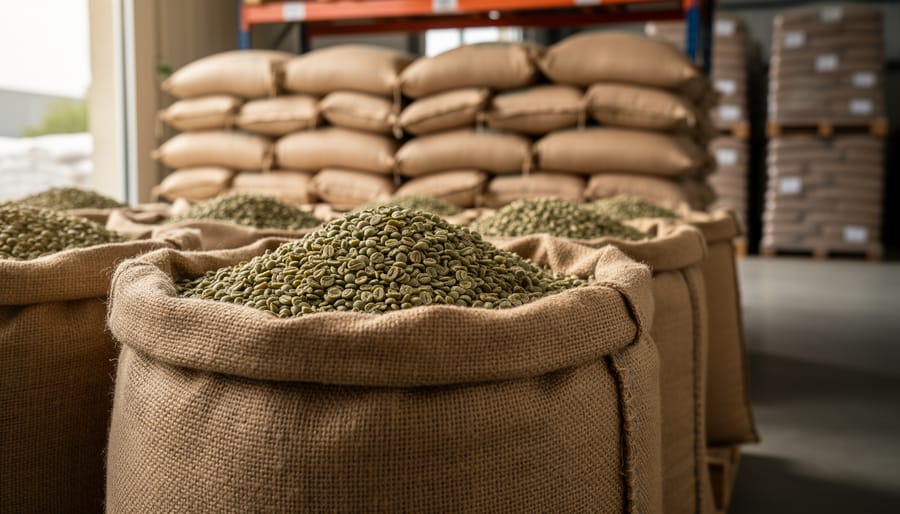
When you hear that coffee “closed higher” or “settled lower,” the number behind that headline almost always comes from one place: the Coffee C contract. It is the world benchmark for Arabica, and its schedule quietly sets the pace for roasters, importers and exporters everywhere else. The full ICE Coffee C contract description lays out the rules, but the idea is simple enough to follow.
The contract prices physical delivery of exchange-grade green beans. Those beans can come from one of 20 countries of origin, and they’re delivered from a licensed warehouse to one of several ports in the U.S. and Europe. Because a bag sitting in one port isn’t worth quite the same as a bag in another, the contract builds in stated premiums and discounts for ports and growths. That’s the science of it: a standardized reference that lets strangers on different continents agree on a price.
A few terms are worth knowing before we go further:
- Coffee C
- The benchmark futures contract for Arabica coffee, priced for exchange-grade green beans.
- Settlement (TAS)
- The end-of-day pricing window; “trade at settlement” lets traders transact at that official price.
- Green coffee
- Raw, unroasted coffee beans, the physical product the contract delivers.
- Differential
- The amount a specific coffee trades above or below the benchmark price.
- Licensed warehouse
- An approved storage facility where exchange-grade coffee is held for delivery.
Here’s where the craft comes in. The exchange price is a reference point, not a ceiling. Specialty lots, the kind with traceable farms and careful processing, often trade at differentials above it, and that premium is how quality and fair pay show up in the numbers. Mainstream commodity coffee deserves respect here, too. It’s the foundation of the market, the baseline that makes those ethical premiums measurable in the first place.
Timing Windows Across the Trading Day

Think of the trading day as a handful of moments that matter more than the rest. Regular trading is where buyers and sellers trade all day. The real action for anyone pricing coffee, though, comes near the close, when the market settles.
Settlement is simply the official end-of-day reference price. Instead of quoting whatever the last random trade happened to be, the exchange fixes a number during a short window, which keeps the benchmark fair and hard to game. That’s why the settlement price is the figure you’ll see quoted in coffee news, and why roasters and importers lean on it when pricing contracts. It’s the shared yardstick.
TAS stands for trade at settlement. It lets participants trade at that official price, and it ends at 1:25 pm. Here’s how the key windows line up:
| Window | What Happens | Why It Matters | Verified Detail |
|---|---|---|---|
| Settlement window | The official end-of-day price is set for futures and options | Becomes the number quoted in news and used in contract pricing | 1:23 to 1:25 p.m. |
| TAS cutoff | Trading at the settlement price stops | Marks the last chance to trade at the official price | Ends at 1:25 pm |
| Adjusted opening | The day begins at a different time than usual | Shows that hours can differ on specific dates | 4:30 a.m. on October 30, 2026 |
One caution: the sources don’t spell out the time zone, so confirm it with the exchange before you plan around these times.
That October 30, 2026 opening is a good reminder that the schedule isn’t set in stone. Specific dates can shift, so treat the exchange calendar as your final word.
Factors That Shift Trading Hours and Timing
Daylight Saving Time and the November 2026 Shift
Clocks changing is one of those small details that quietly reshapes the trading day. In the U.S. context, Daylight Saving began on Sunday, 1 November 2026. Most products remain unaffected while trading, but the research notes a change to the trading schedule tied to that date. That’s exactly the kind of wrinkle worth checking before you plan your morning around the market.
Here’s the catch for anyone following from outside the U.S. Not every region changes its clocks on the same day, and some don’t change them at all. For a stretch of days or weeks, the gap between your local time and the exchange can shift by an hour, even though the exchange’s own schedule hasn’t moved. The same settlement window, 1:23 to 1:25 p.m., can land at a different moment on your wall clock.
I won’t guess at adjusted hours, because the time zone details aren’t confirmed in the facts available here. The reliable move is to read the exchange’s own daylight saving notice and calendar, then convert to your local time yourself. A few minutes of checking beats missing the number the whole coffee trade is watching.
Exchange Calendar Dates, Holidays, and Regional Variance
An exchange calendar is the source of truth for when a market is open. It sets closures, holiday schedules, and special sessions, and it’s where you’ll find one-off changes like the adjusted 4:30 a.m. opening noted for October 30, 2026. The ICE Futures U.S. calendar even lists a September 25, 2026 entry, so it pays to look at the dates themselves rather than assume a normal day.
A closure in one market doesn’t stay contained. Coffee C prices anchor deals everywhere, so when the benchmark isn’t trading, price discovery thins out and buyers and sellers lean on stale numbers until it reopens.
The same contract also lands differently depending on where you sit. Coffee C delivers to ports in both the U.S. and Europe, so traders on each side of the Atlantic experience the same settlement window at very different local hours. The source facts don’t specify time zones, so confirm the schedule in your own local time with the exchange.
Here’s a quick checklist of timing variables worth confirming before you rely on any hour:
- Daylight saving changes, including the U.S. shift on November 1, 2026.
- Exchange holidays and scheduled closures.
- Special session dates, such as adjusted opening times.
- Your local time zone offset from the exchange’s published times.
- The delivery port region you or your counterparty care about.
Think of it as roasting by the clock and the thermometer: the schedule tells you when, but you still have to check the conditions on the day.
Why This Schedule Matters to Ethical Coffee Lovers

Every tick on the Coffee C screen eventually reaches a farm gate, and that’s why the trading clock matters to anyone who cares about ethical sourcing. The benchmark isn’t a villain. Commodity coffee is the foundation of the whole trade, and it gives the rest of us a shared yardstick.
Here’s how a price move travels. Settlement lands in that short window just after 1:23 p.m., and the number gets quoted in coffee news and used by importers and roasters to price contracts. A roaster planning next season’s purchases reads those market price signals adjusts what they’re willing to pay, and passes that logic down the chain to the exporter and the producer. If the benchmark climbs, offers to farmers tend to follow. If it drops, the pressure runs the other way.
Direct and relationship trade works differently, and it’s where the craft shows. Many roasters who buy from named farms treat the exchange price as a floor or reference point, then add a premium for quality, traceability and fair pay. The Coffee C contract prices exchange-grade beans from 20 origins, so specialty lots that cup far above that baseline naturally command differentials over it.
Knowing the schedule helps you ask sharper questions. Does your roaster publish what they paid? Do they pay above the benchmark when it falls? The clock won’t answer those, but it tells you when the number that shapes them gets set.
After the Bell: How to Follow the Market and Act on What You Learn
Once you know the market has a rhythm, you can follow it without turning it into a second job. Think of it as learning to read the weather before a harvest: useful context, not a command to act.
Here’s a simple routine:
- Check the official ICE Futures U.S. calendar for closures, special sessions and any daylight saving notices.
- Confirm your own local time offset, since the source facts don’t specify a time zone.
- Note the settlement window, 1:23 to 1:25 p.m., with TAS trading ending at 1:25 pm.
- Follow the published settlement prices over a few weeks, so you see the pattern instead of reacting to one day.
- Ask your roaster how they price and source their coffees.
A price move on its own tells you little. A rise or fall in the benchmark is one reference point, and specialty lots often sit at differentials above it. Watching it helps you ask better questions, not predict anything.
Those questions are where it gets rewarding. Roasters who share their sourcing and pricing make it easy to see how the benchmark shapes what farmers are offered. Once you’ve bought beans from one of them, learn to store coffee beans well, and dial in your espresso machine timing so the farmer’s work lands in the cup.
Coffee Market Trading Hours: Your Questions Answered
What is the Coffee C contract?
It is the world benchmark for Arabica coffee. The contract prices physical delivery of exchange-grade green beans from one of 20 countries of origin, held in a licensed warehouse and delivered to one of several ports in the U.S. and Europe, with set premiums and discounts for ports and growths.
When does settlement trading end?
Settlement (or “TAS”) trading for Coffee “C” futures ends at 1:25 pm. The settlement window for coffee futures and options runs from 1:23 to 1:25 p.m.
Does daylight saving time change coffee trading hours?
Daylight Saving begins on Sunday, 1 November 2026. Most products will remain unaffected, but a change to the trading schedule is tied to it, so check the exchange’s own notice for the adjusted hours.
Where do I find the official schedule?
The ICE Futures U.S. calendar is the source of truth for hours, closures and special sessions. The source facts don’t specify time zones, so confirm the published times in your own local time before you plan around them.
Think of this as a starting point rather than the final word. Hours can differ on specific dates, and one example is the adjusted 4:30 a.m. opening noted for October 30, 2026. A quick look at the exchange calendar before you plan around a particular session saves guesswork, and it keeps your picture of the market as accurate as the care you bring to your brew.
The Global Coffee Market and Trading may feel like a blur of numbers, but it runs on a schedule you can actually learn. The key moment of the day is the settlement window for Coffee C futures and options, from 1:23 to 1:25 p.m., with settlement trading ending at 1:25 pm. That’s the stretch where the benchmark Arabica price gets pinned down, and it’s the number that ripples out to roasters, importers, and eventually the farm gate.
Hours can shift, though. Daylight saving changes, like the one on Sunday, 1 November 2026, and special dates on the exchange calendar can alter the clock. Time zones aren’t something we can pin down here, so check the official ICE Futures U.S. calendar in your own local time before you rely on any hour.
A little market awareness goes a long way. Next time you taste a bright, carefully roasted cup, remember the farmers, the craft, and the clock behind it.